Keep heating duty, vehicle integration and site supply distinct
Confirm the actual steam or hot-water assignment and any separately proposed process-heating arrangement. A vehicle-mounted boiler is not assumed to change heating medium or supply every treatment service without a configuration-specific response. Useful outlet performance, the installed equipment and the carrier arrangement each need an accepted basis.
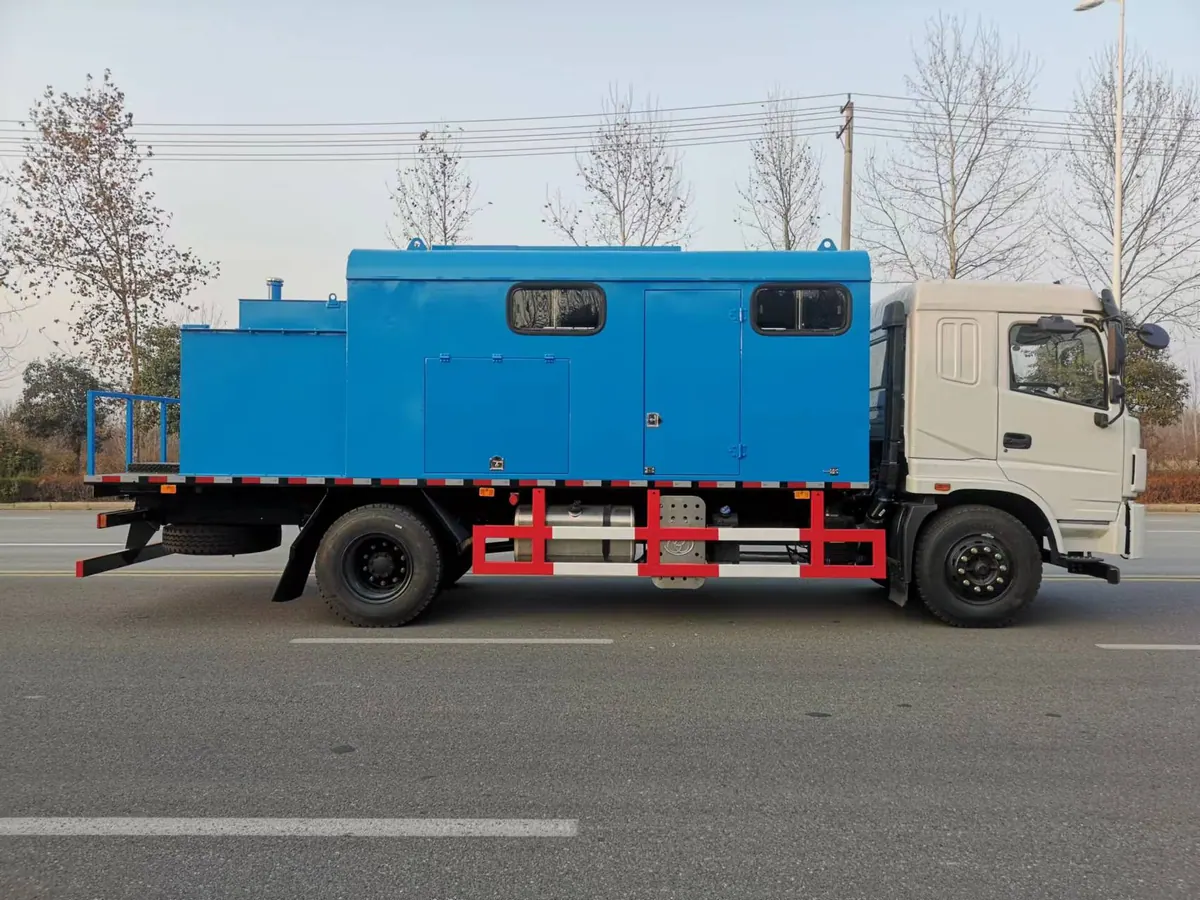
Identify the travel and working conditions, onboard tanks, power and connection equipment included in the order. External water conditioning, replenishment, distribution and receiving-system work remain separate unless explicitly supplied. Retain supplier responsibilities and verification evidence together; automatic controls, a reference photograph or nominal tank capacity do not establish universal autonomy, destination acceptance or unattended site operation.
Use condition-based checks around a fixed maintenance schedule
The vehicle-mounted boiler works in a demanding combination of vibration, dust, weather, transport loads and intermittent high duty. Preventive maintenance should combine calendar intervals, operating hours, job cycles and condition trends. The objective is not simply to replace parts; it is to detect changes before they affect integrating a selected steam or hot-water heating package with its carrier and accepted site interfaces.
Start with the manufacturer manual and component instructions, then adapt intervals using actual service severity. Record pressure, temperature, vibration, oil condition, leakage and alarm history consistently so changes can be compared between jobs.
Practical inspection schedule
| Interval | Typical work | Control point |
|---|---|---|
| Assignment readiness | Review the selected heater, carrier and agreed external connections under actual manufacturer and approved project requirements | Documented checks and identified defects |
| Duty and handover | Actual medium, installed loading and heating-duty observations support later service decisions | Recorded condition and outstanding items |
| Scheduled service | Use installed component instructions, actual severity and relevant service history | Manufacturer-supported interval and task basis |
| Protective and measurement functions | Verify the actual installed functions under a competent approved plan | Configuration-specific verification records |
| Significant work or storage | Follow authorized preservation and return-to-service requirements | Resolved findings and approved reinstatement record |
Troubleshooting by symptom, not guesswork
| Symptom | Possible causes | First disciplined action |
|---|---|---|
| Required duty not met | Material, supply, drive, instrument or component conditions may differ from acceptance | Retain actual readings and configuration for qualified investigation |
| Changed equipment condition | The installed selected heater, carrier and agreed external connections needs assessment | Follow manufacturer response and approved escalation requirements |
| Changed reading or result | Measurement conditions and actual duty may both influence the observation | Use the accepted verification and diagnosis arrangements |
| Repeated protective event | An initiating equipment, process or interface condition may remain unresolved | Never bypass protection; retain event evidence and resolve the cause under the approved plan |
Investigate changes with competent personnel, actual manufacturer information and approved project procedures. Preserve the duty, instrument and event evidence before assigning a cause. A repeated protective event requires resolution of its initiating condition, not a wider setting or bypass.
Build a critical-spares list from failure consequence
Stock parts that combine meaningful failure probability with long delivery time or high downtime impact. For this package, start with service kits for duty-selected boiler or heater module, specified water or fluid supply arrangement, selected burner and accepted fuel supply, configuration-specific power and carrier interfaces. Include seals, filters, sensors, relays, approved lubricants and the special tools needed to install them correctly.
- Identify every spare by manufacturer, model and drawing reference
- Separate commissioning, two-year operating and overhaul spares
- Store elastomers, electronics and lubricants within shelf-life limits
- Preserve large rotating or pressure components during storage
- Update inventory after every withdrawal and configuration change
Maintenance records that protect lifecycle value
Keep a history for each unit: serial numbers, job hours, operating envelope, inspections, alarms, repairs, parts fitted and calibration status. These records support warranty discussions and reveal whether repeated faults are caused by service severity, installation, operation or component selection.
After significant work, use the equipment-specific authorized return-to-service plan. Retain component identities, findings and relevant verification, resolving conditions requiring further review before accepting another assignment.
Vehicle-Mounted Boiler project-specific engineering focus
Site preparation is part of equipment selection because utility quality and connection limits can change the practical capacity. Maintenance planning should connect wear in the duty-selected boiler or heater module with changes in thermal output, then compare that evidence with the condition of the specified water or fluid supply arrangement. Inspection of the selected burner and accepted fuel supply protects performance during mobile steam cleaning, while verification of the configuration-specific power and carrier interfaces is especially important before oilfield heating.
Use the four intended duties as separate review cases: mobile steam cleaning, oilfield heating, pipeline maintenance and temporary industrial steam supply. For each case, record the starting condition, target output, operating duration, expected variation and shutdown condition. This exposes whether a shared configuration is genuinely suitable or whether a different control range, material, auxiliary system or connection set is needed.
duty-selected boiler or heater module with specified water or fluid supply arrangement
Review their operating envelopes together. Capacity on one side is not useful if the connected subsystem cannot supply, transmit or control the same duty.
selected burner and accepted fuel supply with configuration-specific power and carrier interfaces
Define monitoring, protection, calibration and maintenance access as part of the package acceptance criteria rather than optional details.
The RFQ should therefore carry a project data sheet, interface drawing and deviation schedule. That combination gives the manufacturer enough information to explain the design and gives the buyer a consistent basis for technical evaluation, factory testing and later commissioning.
For broader industry context, consult ASME Boiler and Pressure Vessel Code resources. Project requirements and applicable codes must still be confirmed for the destination country and end user.
Frequently asked questions
How often should a vehicle-mounted boiler be serviced?
Use the manufacturer intervals, then adjust by operating hours, job cycles, environment and condition trends. Pre-job and post-job inspections remain essential.
What spare parts should be kept on site?
Prioritize seals, filters, sensors, service kits and other items with long lead time or high downtime consequence for the installed component models.